
.png)
WV Soil and Drainage Basics: What Homeowners Should Know Before You Dig
- May 21
- 7 min read
In West Virginia, a project can look simple until the bucket hits the ground. One lot cuts clean and stays dry. The next lot is heavy clay, shallow rock, or wet soil that never seems to firm up. That is why soil and drainage are not “extra details.” They are the foundation of whether excavation, septic, grading, and driveway work go smoothly or turn into expensive rework.
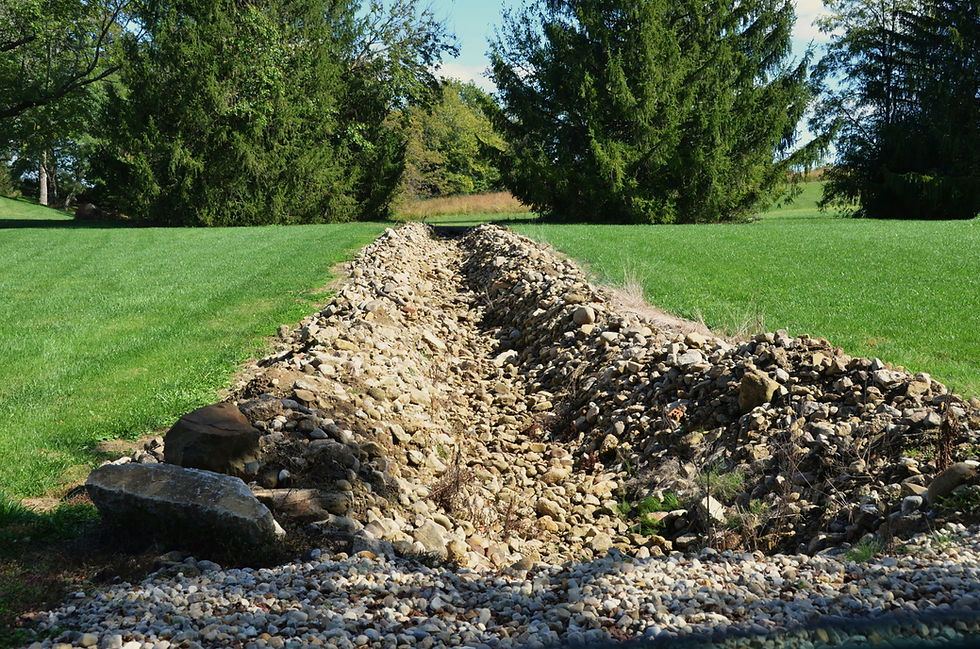
Most homeowners are not trying to become soil experts. You just want to know what matters, what to watch for, and how to avoid the common mistakes that cause delays and added cost. A little understanding up front helps you ask the right questions and make better decisions before any major digging begins.
We are Built Right Construction Inc., based in Glen Daniel and serving Beckley, Raleigh County, and surrounding Southern West Virginia communities. We handle excavation, septic installation, grading, and drainage work. Here are the soil and drainage basics we think every homeowner should know before a project starts.
Soil texture and why it changes everything
Soil texture is basically the mix of sand, silt, and clay. It controls how fast water moves, how well the ground supports weight, and how predictable excavation will be.
Clay is the big troublemaker in many yards. WVU Extension points out that some West Virginia red clays can have high shrink swell potential and can create restricted drainage and limited permeability. That matters because limited permeability means water does not soak in quickly. It stays near the surface. Restricted drainage means the soil stays wet longer after rain. High shrink swell potential can also mean the ground moves more as moisture changes, which can affect surfaces like driveways and graded slopes over time.
If your soil is clay heavy, you are more likely to deal with:
Soggy yard areas that linger after rain
Soft spots that rut under vehicle traffic
Erosion channels that start small and grow
Septic limitations that push you toward more planning and sometimes a different design approach
On the flip side, sandier soil drains faster, but it can also be more prone to washing out on slopes if runoff is not managed.
Slope and runoff in WV: why water moves so fast here
A lot of Southern WV properties are built into hillsides. Water is always going to obey gravity, and slope determines whether it soaks in or runs off.
USDA soil descriptions show this clearly. For example, Highsplint soils describe runoff class as low or medium on gentler slopes and medium or high on steep and very steep slopes. The takeaway is simple: the steeper the land, the more likely water will move across the surface fast.
Another USDA soil description for WV notes runoff potential can range from negligible to very high depending on conditions. That range is exactly why two properties can behave differently even in the same general area.
When runoff is not planned for, it causes predictable issues:
Driveways wash out at edges and low points
Yards stay wet in the same spots because water collects there
Erosion cuts channels that get deeper each storm
Water concentrates near a foundation and creates moisture problems
Septic drainfields stay saturated and do not perform like they should
Water table basics and how to spot it
The water table is the level where the ground is saturated. In many WV areas, the water table can be seasonal. Your lot might look perfectly dry in late summer and turn into a sponge in spring.
WVU Extension explains that water table evaluation should consider depth and permanence, and it notes that a water table within the depth of septic tank or drainfield installation can lead to inadequate wastewater treatment unless special precautions are taken. That is a big deal not just for septic, but for any excavation where you need stable ground and predictable drainage.
WVU Extension also gives a practical clue homeowners can use. Grayish soil colors and mottling can indicate shallow seasonal water. If you dig a small hole and see gray soil, or mixed mottled coloring, it is a sign that area holds water during part of the year.
If you suspect seasonal water table issues, it impacts decisions like:
Where a septic drainfield should go
How a driveway base should be built and drained
Whether foundation drainage needs more attention
Whether a low area should be filled, regraded, or drained
Rock and restrictive layers: what happens when you hit them early
In Southern WV, shallow rock is common in some areas. Rock affects more than excavation difficulty. It can also change drainage behavior.
When you have a restrictive layer, water can perch above it. That means water collects above the rock layer instead of moving down. This is one reason yards can stay wet even when the surface looks like it should drain.
Rock also affects septic planning because septic drainfields rely on a certain depth of suitable soil. If the usable soil depth is limited, the design may need to change.
Why these basics matter for septic systems
Septic systems depend on the soil, not just the tank. Soil conditions help determine whether a conventional approach makes sense or whether you need a different system design.
WVU Extension notes that a high water table within the depth of septic installation
can cause inadequate treatment without special precautions. In plain language, a drainfield needs the right soil conditions to treat effluent safely. If the site is wet or shallow, you plan differently.
This is also why we encourage homeowners to think about septic early in the project, before clearing and heavy equipment traffic compacts the best potential area.
Why these basics matter for driveways
Driveways fail for predictable reasons in WV. Water is one of the biggest.
If water is allowed to run down the driveway, it will cut. If the base sits on wet, soft soil without proper drainage, it will move and rut. If the driveway crosses a flow path without a controlled outlet, you get washouts.
Soil and drainage planning often shows up in driveway work through:
Base thickness and material selection
Edge support and shoulder stability
Culvert placement when water must cross
Ditching or swales to keep water from running on the driveway surface
Why these basics matter for grading and excavation
Grading is not just shaping dirt. It is shaping water movement. If you do not account for runoff, the grading plan becomes a temporary fix that fails when the first real storm hits.
A solid grading approach does three things:
Moves water away from the home and sensitive areas
Prevents water from concentrating and cutting channels
Provides stable surfaces that do not stay saturated
Excavation work also goes better when you plan for water. Wet ground slows progress, increases restoration needs, and can create safety issues.
What to do before you dig
You do not need a complicated process to avoid most mistakes. You need a practical checklist and a little patience.
Watch your property in rain
This is the simplest form of site analysis. Walk the property during a hard rain and look for:
Where water enters the site
Where it concentrates
Where it poolsWhere it exits
Most problems are visible once you know to look for flow paths instead of puddles.
Protect the best areas from compaction
If you think you might need septic work, keep heavy equipment off the likely drainfield areas until the plan is confirmed. Compaction can change soil behavior and make future work harder.
Check for water table clues
If you dig and see gray soil or mottled soil, that is a clue to slow down. WVU notes mottling and grayish colors can indicate shallow seasonal water.
Plan access before moving soil
A lot of damage happens when equipment has no planned route. A planned access path prevents rutting across the whole yard and keeps the project area contained.
Ask about seasonal conditions
WVU points out water table evaluation should consider depth and permanence across seasons. If you only evaluate in a dry stretch, you may miss the conditions that will matter most.
What not to do before you dig
These are the moves that create expensive rework.
Do not assume one good hole means the whole lot is good
Do not clear and grade the entire property before septic and drainage planning is set
Do not build a driveway finish surface before you understand runoff paths
Do not fill a low spot without giving water a new route
Do not ignore repeated wet areas, because they almost always have a consistent cause
Pricing factors tied to soil and drainage
Homeowners often ask why two quotes can be different. Soil and drainage conditions are a major reason.
Cost tends to increase when:
Soils are heavy clay and stay wet, slowing excavation and restoration
Runoff is significant due to steep slopes and requires more grading and diversion
Rock is shallow and excavation takes longer
Driveway base needs more build up and drainage planning
Drainage outlets require stabilization to prevent erosion
The best way to control cost is to diagnose early and choose a plan that matches the land, rather than forcing the land to match a plan.
Timeline: why early soil planning saves weeks
Most timeline problems come from late discoveries.
You clear the lot, then realize the best septic area is compacted.
You install a driveway, then realize water crosses it and you need a culvert.
You grade a yard flat, then the first storm shows water pooling against the home.
When soil and drainage are accounted for early, the project stays predictable.
What to expect when Built Right evaluates your site
When we look at a property in Glen Daniel, Beckley, and the Raleigh County area, we focus on practical answers:
We identify runoff paths and problem areas
We look for soil and water table clues
We talk through excavation access and staging
We explain what the ground conditions mean for septic, driveway, and grading decisions
We recommend the simplest plan that will still hold up long term
FAQ: WV soil and drainage basics
Why do I need soil and drainage planning before excavation?
Because soil texture, slope runoff, and water table conditions affect cost, design, and long term performance. WVU notes clays can have restricted drainage and water tables can limit septic use without special precautions.
What does runoff class mean?
It describes how likely water is to run off the surface rather than soak in. USDA soil descriptions show runoff class increases with steep slope.
What is mottling and why should I care?
WVU notes mottling can indicate shallow seasonal water. It is a clue that the area can stay wet at certain times of year.
Can soil and drainage affect my driveway?
Yes. Wet soils and poor runoff control can cause rutting, washouts, and base failure, especially on sloped sites.
What is the biggest mistake homeowners make?
Starting major clearing, grading, or driveway work before they understand where water moves and how the soil behaves across seasons.
Want a plan that matches your land before you start digging?
If you are planning excavation, septic work, grading, or a driveway in Beckley, Raleigh County, or nearby Southern West Virginia areas, Built Right Construction Inc. is based in Glen Daniel and can help you start with the right plan. Reach out for a quote and a straightforward site evaluation that saves you time and prevents rework.


